- San Diego Sailing & Power Squadron - America's Boating Club
Round out your knowledge or discover something new by taking one of our brief, boating education seminars led by experienced volunteer instructors.
Boat Handling
Electronics
Navigation
Facing the Environment
Safety
Techniques
Cruising
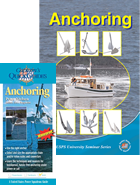
Know how to anchor in a variety of situations, weather, or seabed and be prepared to adjust for changing conditions.
Learn the skills and knowledge of securing your vessel to the bottom through the use of a line, chain, and one or more anchors. Whether it’s for fishing, swimming, a lunch break, or an overnight stop, one of the real pleasures in boating is “hanging on the hook” in some quiet spot. Emergencies such as loss of power, equipment breakdown or failure, or weather hazard may also require that your boat be anchored for a time.
Good seamanship demands that all boaters know how to anchor safely. Anchoring topics begin with how to select an anchorage and how to anchor depending on conditions. After learning how anchors should be used, you will know if yours is satisfactory or what kind(s) to buy. The seminar covers useful anchoring tips and tricks and concludes by discussing how to moor and raft safely.
Ask your local squadron about on-the-water coaching to help you practice your skills with assurance, so you don’t get carried away.
Anchoring with Assurance is offered as a seminar and as part of the Boat Handling course. Save by taking the whole course.
Avoid collisions and other hazards! Know the rules of the road.
Navigational rules of the road help you know what to do when you share the water with other boats, how to recognize and signal intentions, and how to avoid a collision. This seminar focuses in a practical way on helping you understand the basic rules encountered by recreational boaters during almost every boating outing and the rules most likely to apply in the local waters where you boat. It covers skipper responsibilities, general rules, and definitions, rules to avoid a collision, lights and shapes, and sound and light signals.
Rules of the Road will help you understand how to recognize local situations, the rules that apply, and the actions you should take. And be sure to read the United States Coast Guard’s Navigational Rules and Regulations Handbook for the authoritative word on all rules of the road, since – as the skipper or designated crew member – you are responsible to know the rules that apply anywhere you boat.
Rules of the Road is offered as an individual seminar or it may be taken as part of the Boat Handling course. Save by taking the whole course.
Do you know which knots to use in every situation? Learn to securely attach your boat and other useful applications.
Learn how to secure your boat to docks, piers, and other boats;
handle rescue and repair situations; manage running rigging; anchor
securely; and tow other vessels or people. This seminar has been
designed to help you to know which lines and knots to use in each
situation. You’ll gain knowledge and hands-on experience selecting the
appropriate line and tying the 10 most useful knots, bends, and hitches;
and you’ll learn how to care for the lines on your boat and on the
dock.
Knots and Line Handling is offered as an individual seminar or it may be taken as part of the Boat Handling course. Save by taking the whole course.
Look like a pro. Protect your boat, your passengers, and yourself with the docking/undocking skills you need.
Docking can be one of the most stressful tasks you can perform, especially if you are a new boater. Learn how to control your boat at slow speed in close proximity to other boats and fixed objects. Learn how to approach the dock in a variety of conditions and safely secure your boat. Learn how to depart the dock in any situation. Understand the use of spring lines, how to safely fend off, and other techniques. With the knowledge you’ll gain in this seminar, coupled with your on-the-water practice, your confidence in docking and slow-speed maneuvering will increase and your boating will be both safer and more enjoyable.
Confidence in Docking and Undocking is offered as a seminar and as part of the Boat Handling course. Save by taking the whole course.
Gain confidence, knowledge, and skills that you need for a variety of boat-handling situations.
Learn about basic operations; trimming your boat; operating on plane; handling seas and waves; dealing with bars, rivers, rivers, and bends; and other situations you will encounter along your cruise. And you’ll have a better understanding about issues you can control and how to handle them. Understand the issues that the environment will present and how to react in a timely manner.
Ask your local squadron about on-the-water coaching to help you practice your at-sea boat-handling skills until you feel fully confident handling your boat underway.
Boating with Confidence is offered as a seminar and as part of the Boat Handling course. Save by taking the whole course.
No one wants to think about it, but emergencies happen on boats. Be prepared for a variety of boating mishaps, medical emergencies, and other crises!
Prevention and preparation make all the difference. This seminar will prepare you to handle common emergencies that can happen when you are on your boat and away from the dock, whether you venture out for the day or are leaving on a longer cruise. You will learn how to deal with them as they occur and especially when the skipper is unable to respond.
Upon completion of this seminar, you will have gained an understanding of the most common types of vessel emergencies and how to deal with them, how to handle onboard fires, how to recognize and prepare for medical emergencies and how to communicate with crew, other boats, and first responders.
Emergencies on Board is offered as a seminar and as part of the Boat Handling course. Save by taking the whole course.
Know where you are and where you are going using GPS. Learn how to use GPS, select and use GPS devices, and apply GPS to your navigational needs.
Click here for closed caption version of video.
Boaters need the most reliable location and position information available, which makes getting the most out of your Global Positioning System pretty important. Learn how to use waypoints, build and execute routes, and monitor progress. Learn to interpret location information and tracking data, and get an overview of how GPS integrates with your boat’s electronic systems. Explore what features you need and how to arrange your display. Also get tips on connecting your GPS to your VHF marine radio, which opens up a new world of digital hailing and distress signaling.
Boaters need the most reliable location and position information available, which makes getting the most out of your Global Positioning System pretty important. Learn how to use waypoints, build and execute routes, and monitor progress. Learn to interpret location information and tracking data, and get an overview of how GPS integrates with your boat’s electronic systems. Explore what features you need and how to arrange your display. Also get tips on connecting your GPS to your VHF marine radio, which opens up a new world of digital hailing and distress signaling.
Are you a regular passenger on your family’s or friend’s boat? Looking to join your spouse on boating adventures? Learn the essential boating skills you need to operate a boat safely and become a confident and valued crew member.
Click Here for Closed Caption Version of Video
Crew at the Helm introduces boating activities including an understanding of anchoring, docking, navigation and much more. You’ll discover how to prepare for bad weather, provide first aid, handle on-board emergencies, and be a self-assured first mate onboard.
What’s included?